October 3, 2025 — MPPOA Gala
That’s me on the right holding the plaque. To my immediate left is Joe, president of the Minnesota Conservation Officers Association (MCOA). On the far right is Caleb, MCOA’s vice president. On the far left is my friend Joe K., a game warden I worked alongside more times than I can count. These are field people—ground-pounders. The ones who answer the call, hike the miles, and deal with the messy parts that don’t show up in press releases. In short: my people.

Tonight, at the Minnesota Police and Peace Officers Association Gala, they handed me a retirement plaque. The room was alive with the sounds of laughter, clinking glasses, and applause. When the plaque touched my hands, it wasn’t just wood and metal—it was a handshake, a hug, and a quiet “see you soon.” It was the first public acknowledgment of my retirement since May 5, 2025….well, actually ever until tonight.
The Year Before the Photo
Late February 2024, I stepped onto medical leave and into intensive therapy. Once a week, every week, I worked through PTSD and the long tail of the job—asking the hardest question a cop can ask: Is staying in this career still the right thing for my mind, my family, and me?
Some folks reached out—a few a lot, some a little. A couple from far away, others nearby. And some didn’t. That’s real. Mental health carries stigma, uncertainty, and the fear of saying the wrong thing. People worry about overwhelming you—or making it worse.
Here’s what I’ve learned on this side of it: reaching out is a case-by-case thing, but it’s almost always okay to dip a toe in the water. A short text. A quick call. “Thinking of you.” If the door’s cracked, it’ll open. If it’s not, that’s information too.
And it goes both ways. I can reach out too. I can say, “I’m good today,” or “Not up for talking.” The responsibility isn’t all on the team, and it isn’t all on the person who’s struggling. It’s shared.
Mail vs. Moments
Before tonight, my retirement mostly arrived by mail. My numbered badge showed up in an envelope. A DNR plaque, a commissioner’s note, and an auto-pen letter from the chief were left on my doorstep months ago. No knock. Just a manila envelope waiting for me to trip over on the way out.
That’s the difference between mail and moments. Envelopes are efficient. Moments are human.
I served over twenty years—nine in the Minnesota National Guard with deployments, nearly thirteen in Minnesota State law enforcement, plus time as a Minnesota civilian employee. That’s a lot of uniforms and a lot of nights. When it was time to step back, I didn’t need a parade. I just needed people. Which is why tonight mattered.
Leadership, If You’re Listening
I’ll say it again: this is a two-way street. I own my side. There were days I reached out and days I didn’t. But leadership isn’t graded on whether things are easy—it’s graded on whether you show up when they aren’t.
If you’re worried that reaching out might “make it worse,” ask the harder question: why does a simple call feel dangerous? If the answer is that your prior involvement—or lack of it—might surface, that’s not a reason to stay silent. That’s your cue to self-audit. Avoidance is not care; it’s self-protection dressed up as caution.
Here’s the truth I’ve earned the hard way: If you only value people when they’re useful to your mission, you never really valued them—you valued the work they did for you. That’s a culture problem, not a calendar problem.
Silence is not neutral. It isolates the very people most at risk. It erodes trust in leaders and the institution they represent. You don’t prevent harm by withholding humanity. You prevent harm by being present, consistently, and without conditions.
Leadership isn’t the speech at graduation; it’s the knock at the door when someone’s chapter closes. The true measure of leadership isn’t how you handle the top performer on their best day, it’s how you stand beside them during their hardest day. Choose presence over perfection. Choose discomfort over distance.
A 60-Second Self-Audit for Leaders
- Did you personally call, text, or visit within 72 hours of learning about the leave/retirement?
- Did you set a follow-up—7 days, 30 days, 90 days—on your own calendar?
- Did you offer one practical thing (help with paperwork, a point of contact, an invite to an event), not just “let me know”?
- Did you say their name in the room when they weren’t there—and mean it?
- If you hesitated, was it to protect them, or to protect you?
What Good Looks Like (Minimum Standard)
- Reach out once privately, once publicly. Both matter.
- Show up at least once in person. Mail is efficient; people are healing.
- Stay the course: 30/60/90-day check-ins. Put them on your calendar and keep them.
- Honor the service: invite them into alumni circles, ceremonies, or simple coffee. Keep them in the family photo.
If one of your people leaves tomorrow, will they remember you for your leadership—or your absence? You won’t break someone by caring. You might break them by disappearing.
What Tonight Gave Me
Seeing Caleb and Joe again, and reconnecting with Joe K., grounded me. I should see them more—I own that. But tonight was a reminder that the work never was about badges or plaques. It was about us. The people who don’t look away, who do the greasy, heavy lifting together.
And I know my story isn’t unique. Across Minnesota and across the country, there are men and women who step off duty for the last time and wonder if anyone will notice. Some get the knock on the door. Too many just get the envelope.
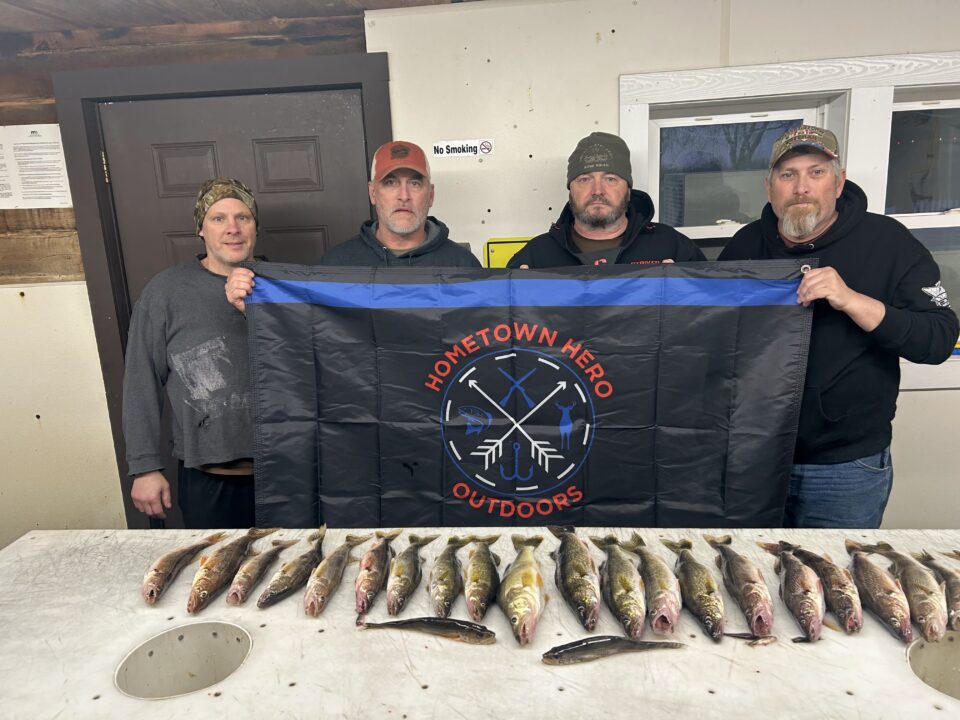
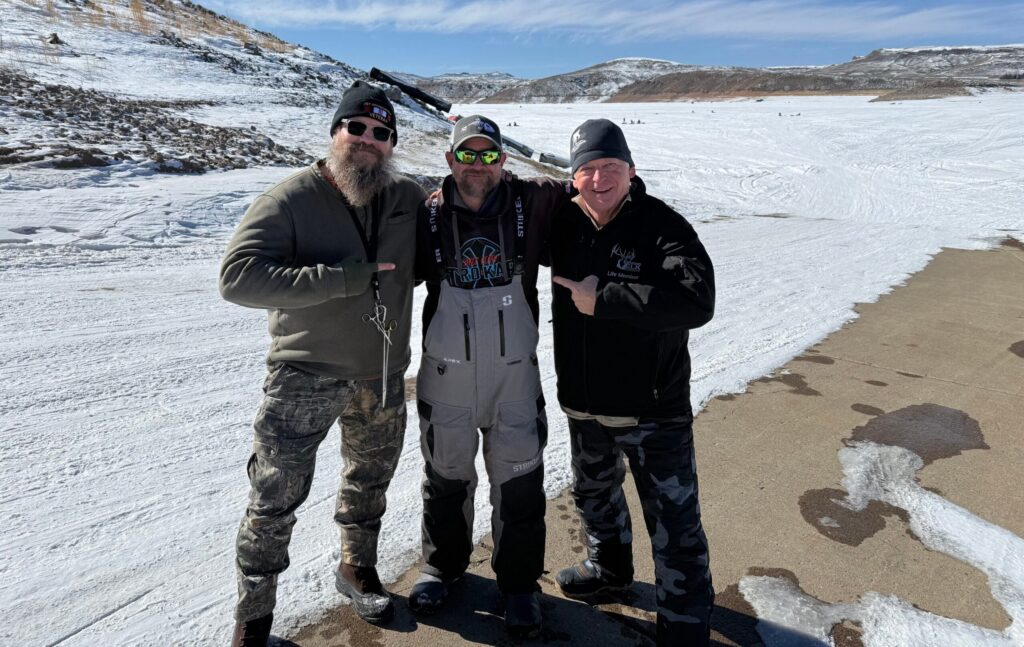
That’s why I believe in Hometown Hero Outdoors. Because when the job ends, the need for connection doesn’t. The uniform might come off, but the weight doesn’t disappear—and neither should the people. Out in the woods, on the water, in the quiet—we give space to reset, and proof that no one has to carry the load alone.
A Call to the Rest of Us
So if someone you served with crosses your mind tonight—don’t wait. Send the text. Make the call. Presence beats perfection.
Because plaques gather dust, envelopes get tossed, but people—the ones who show up—are the legacy that lasts.
The men beside me in this photo — left and right — are the kind of people I would gladly give my life for, any day, and that will never change. What has changed is not my loyalty to them, but my willingness to stay under a leadership that could not stand with me the same way.
_______
About the Author: Chris Tetrault is a medically retired Minnesota Conservation Officer and veteran of the Minnesota National Guard. With over two decades of public service, he now leads Hometown Hero Outdoors, a national nonprofit supporting the mental health and well-being of veterans, military members, and first responders through outdoor experiences.